
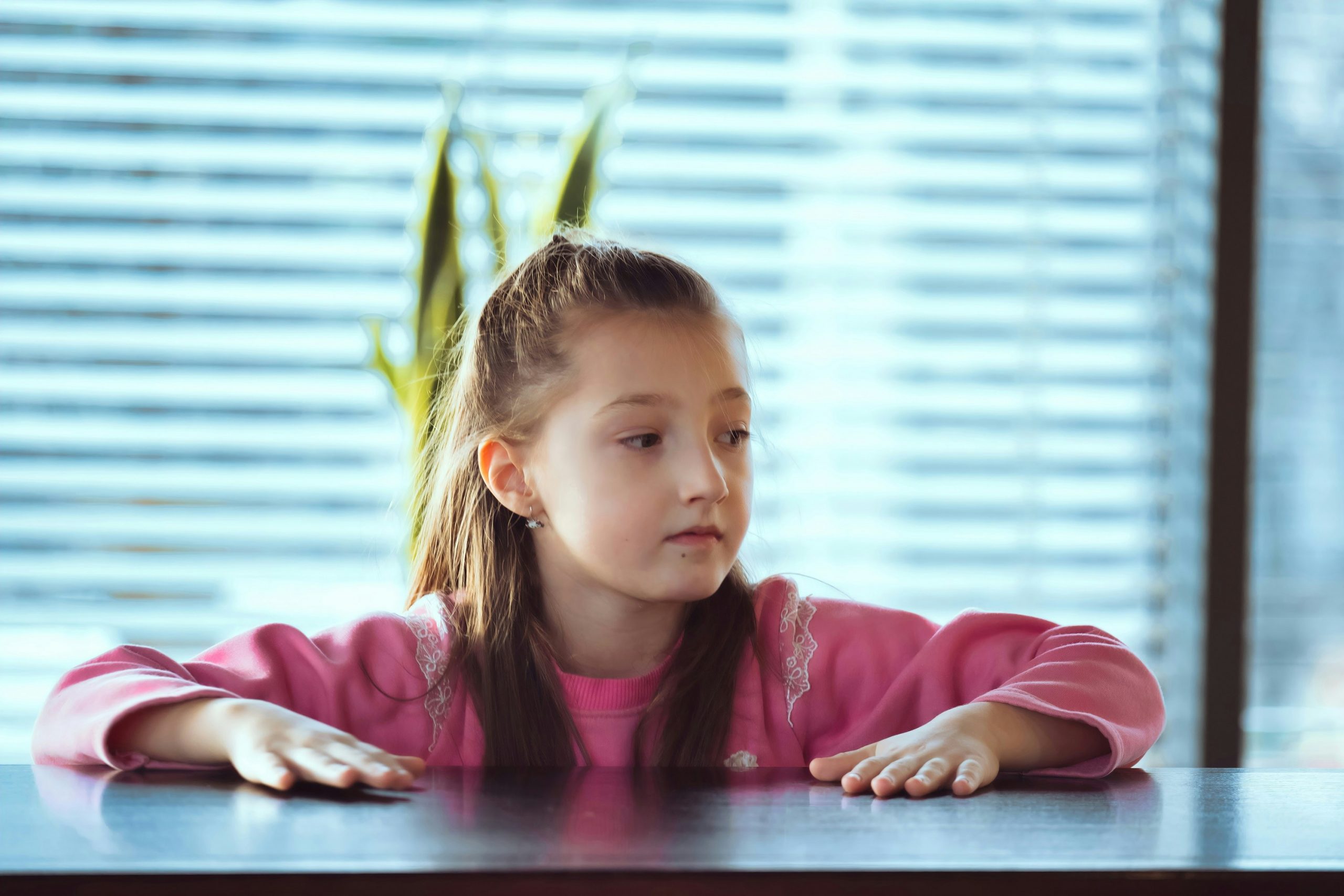
She’s on the honor roll. He’s a starter on the varsity team. She has good friends, a full schedule, and a life that, from the outside, looks like it’s going exactly the way it’s supposed to. And most of the time, you believe it. Most of the time, everything seems fine.
But there are moments – a Sunday night meltdown that comes out of nowhere, a stomachache that keeps showing up before a big day, a level of irritability that doesn’t match the circumstances – you wonder if something else is going on underneath it all.
It makes sense to wonder. Maybe you’ve been reassuring yourself that everything must be fine because your child is still performing, still showing up, still succeeding.
Clinically significant anxiety is one of the most underidentified mental health challenges in high-achieving kids and teens. Not because it’s rare in this population. Because it hides so well.
Why High Achievers Are the Hardest to Identify
Most of what we recognize as anxiety in children looks like avoidance, withdrawal, or visible distress. The child who refuses to go to school. The one who melts down at birthday parties. The one who can’t sleep alone or won’t try anything new. These kids get identified because their anxiety is disruptive in ways that are hard to ignore.
High-achieving kids often come across completely differently. Their anxiety doesn’t appear to stop them. In fact, sometimes it drives them. The same nervous system activation that produces worry and fear also produces focus, preparation, and effort. A child who is terrified of falling behind may be motivated to study harder. A teen who is afraid of disappointing others may choose to work longer. From the outside, it looks like conscientiousness, dedication, and maturity. What’s underneath is a different story. Underneath is a nervous system that is continually activated and may not have had a moment of genuine rest in months.
This is what makes achievement such an effective camouflage. Working longer hours, juggling a packed schedule, and maintaining social relationships can look healthy, or even admirable in a high-achieving kid. And they can be! But, if that lifestyle is being maintained by an anxious and overwhelmed nervous system, what is underneath will eventually find its way to the surface. It’s easy for parents, teachers, and coaches to see the hard work, commitment, and capability. By the time the anxiety becomes visible, it has often been building for a long time.
What Anxiety Actually Looks Like in This Population
Here’s what clinically significant anxiety actually looks like in kids and teens who are still performing well.
Physical symptoms that seem to have no explanation. Stomachaches before school, headaches that come and go, tension in the body, trouble sleeping despite exhaustion, getting sick more often than seems normal. The nervous system speaks through the body, and high-achieving kids who have learned not to express vulnerability often register their anxiety physically before they express it emotionally. It can be difficult to connect these patterns to anxiety if you aren’t also watching out for behavioral signs. But they are worth paying attention to.
The periodic breakdown that seems disproportionate. Your child is generally holding it together. And then, every few weeks, they fall apart completely — crying, overwhelmed, unable to identify exactly what’s wrong or where it’s coming from. This pattern is not random. It is usually the result of stress that has been pushed through or pushed aside. When stress isn’t processed, it builds up over time until it finds an exit. The trigger is rarely the real cause. What you’re watching is weeks of accumulated pressure finally surfacing. The fact that it looks disproportionate is itself an important clue.
Irritability and mood shifts that seem out of character. A teen who is managing significant internal pressure will often show it through irritability before they express it directly as sadness or worry. The teen who is grouchy at the start of a new week, or snapping at family members in ways that feel out of character, may hide their anxiety with moodiness and frustration. The anticipation of demands ahead can hijack a nervous system that is already running close to its limit.
Self-reassurance and reassurance-seeking. When kids talk themselves through things out loud – “It’s going to be fine, I’ve done this before, I can handle it” – it can be a healthy coping skill that demonstrates self awareness as well as the ability to self soothe. But, when children use that skill in situations that don’t seem to warrant it, it may also be a signal that the worry underneath is significant enough to require that kind of management. Reassurance-seeking from parents is common and serves the same function.
Inability to rest, slow down, or tolerate downtime. A teen who cannot stop, who fills every hour and feels uncomfortable when nothing is scheduled, is not just a busy kid. For many high-achievers, staying busy is a coping strategy. Slowing down gives the anxiety that is behind the scenes an opportunity to surface. In that case, rest may feel threatening rather than restorative. If your child seems genuinely unable to enjoy unstructured time – not just bored, but uncomfortable, restless, or guilty – that is worth noticing.
Changes in what they care about. Anxiety over time is exhausting. One of its subtler signs is a gradual flattening of enthusiasm. Sometimes the things that used to light a kid up start to feel like obligations, or new interests stop emerging. This can look like just growing up. Sometimes it is. But when a child who was previously engaged and curious starts to seem like they’re just going through the motions, it’s worth asking what’s underneath that shift.
The Internal Experience You Can’t See
What makes this population particularly easy to miss is that the internal experience and the external presentation can be almost completely disconnected. A child can be performing at a high level while simultaneously carrying constant pressure, overthinking, an inability to relax, and a pervasive fear of what happens if they stop. That internal experience is real and it matters, even when it isn’t visible from the outside.
Anxiety at its core is a threat detection system. It is the nervous system’s way of scanning for danger and preparing the body to respond. In the right amount, it keeps us alert, motivated, and prepared. But when the threat detection system is chronically activated, the cost accumulates over time. When a child’s nervous system is treating a homework assignment or a soccer tryout the way it’s designed to treat actual danger, the body registers the strain. Sleep suffers. Emotional reserves get depleted. And the child who was managing fine eventually isn’t.
This is one reason why catching it early matters. The coping strategies that high-achieving kids develop on their own, including perfectionism, over-scheduling, avoidance of vulnerability, constant striving, are not net neutral. They work in the short term, but they borrow against the child’s wellbeing in the long run.
How to Tell If It’s Time to Get Support
Every child experiences stress. Stress, in reasonable amounts, is not a problem. It’s a normal response to an unpredictable and sometimes demanding world, and some amount of it is actually useful. The question is not whether your child has stress, but whether their stress is working for them or against them.
Here are a few things for you to consider. Is your child able to genuinely recover? To rest, to enjoy things, to come back from a hard week without it taking a toll that carries into the next one? Are they sleeping reasonably well? Is their mood generally stable, or are you seeing significant fluctuations (not just normal teen moodiness, but a pattern of irritability, flatness, or periodic emotional overwhelm)? Are their relationships intact and satisfying to them? Are they still able to find enjoyment in at least some parts of their life?
If you are noticing a consistent decline in one or more of these areas, even if your child is still performing well, then anxiety may be part of the picture for them. Functioning and struggling are not opposites. High-achieving kids can do both at the same time, often for a long time, because they are skilled at managing appearances and may be uncomfortable asking for help.
What Happens When You Get Support Early
Therapy for anxiety in high-achieving kids is not about reducing ambition or making them care less. The goal is not a different child. It’s the same child with a wider set of tools; one who can recover from setbacks, tolerate imperfection, and access their capability without fear humming constantly in the background.
Using a Cognitive Behavioral Therapy framework, the work centers on identifying the thought patterns that are driving the anxiety, understanding what the nervous system is actually responding to, and building real strategies to manage pressure in ways that don’t borrow against long-term wellbeing. It is practical work. It produces real change. And the kids who engage in this process don’t become less capable — they become more consistently themselves, able to perform at a high level without being driven by fear.
You are an expert on your child. If something you’ve read here sounds familiar, reach out. You know your child. The fact that they seem fine to everyone else doesn’t mean your instinct is wrong. It may just mean that achievement has been doing a very effective job of hiding the problem.
Shelby Kallus is a Licensed Professional Counselor at Bellaire Family Counseling in Bellaire, TX. She specializes in anxiety and depression in high-achieving children and teens, using CBT-based approaches to help kids build real strategies for managing stress, not just pushing through it. If you’d like to work with Shelby, you can call (713) 300-8951 or email info@bellairefamilycounseling.com. You can also schedule a consultation at a time that is
convenient for you.