
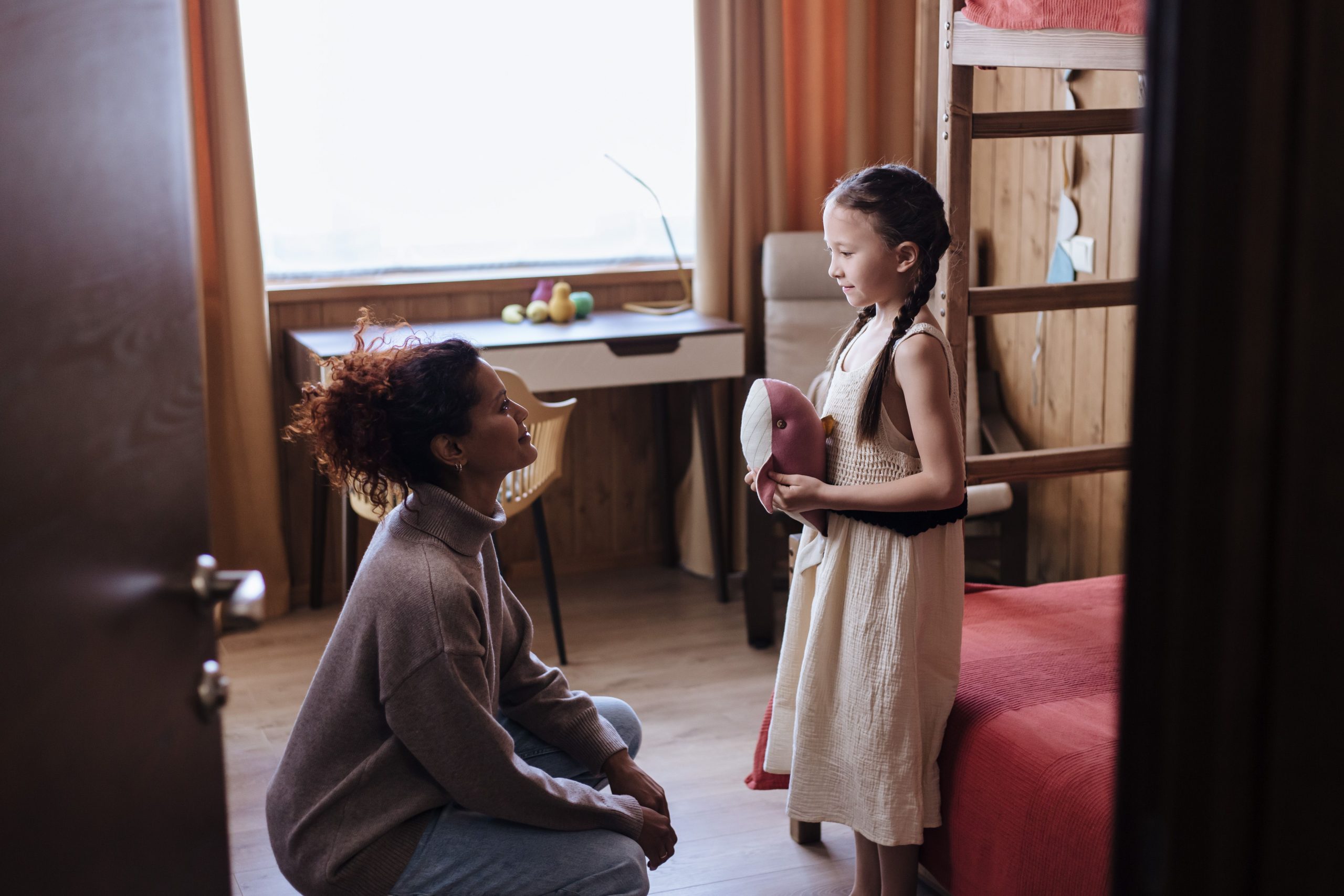
Teaching Consent at Home: A Parent’s Guide
In the first two posts of this series, we looked at why consent begins with boundaries and what makes a yes count. This post is about what you can actually do. Consent isn’t taught in one big talk. Kids learn it from how they’re treated, from what they see the adults around them do, and from hundreds of small moments at home.
Start with how you treat them
Your child’s first lessons in consent come from you. A simple example might be – when your child says ‘no’ or ‘stop’ to playful tickling or roughhousing, accepting their no without sulking or pushing. They learn that a no is safe to give and that it holds.
Some no’s you can’t honor. Car seats, doctor visits, and safety aren’t optional. In those moments, say so plainly and explain why: “I know you don’t want to, and that’s okay. We have to do this to keep you safe.” That teaches the difference between overriding a no for a good reason and simply ignoring it.
Let them see it with other adults, too. When you turn down an invitation politely, or accept a friend’s no without fuss, you’re modeling this well.
Teach both sides to every child
Every child needs two skills: giving a clear yes or no, and reading and respecting someone else’s. Most of us teach one and assume the other will follow. But, it’s important to practice both. Let your child stop the tickle game, and let them be told to stop. Let them ask before borrowing a toy, and be the one who gets asked.
What gets in the way of honoring consent
You might be surprised to learn that knowing about consent and having good attitudes toward it don’t reliably predict how someone will act when it matters. So, teaching rules or definitions alone won’t do the job. Research about who crosses sexual boundaries points to a few consistent factors. Those factors also help us see what to build into kids to help them respect a no.
- Entitlement and hostility. Men with traits of narcissism or entitlement may respond to a woman’s refusal with more hostility. And, men who hold hostile attitudes toward women generally and approach sex impersonally are more likely to be sexually aggressive.
- Lack of empathy. Individuals with lower empathy as early as middle school are at a higher risk of committing sexual violence later.
- Exposure to inappropriate content. Across 22 studies in 7 countries, pornography use was associated with sexual aggression. *We cover this in depth in The Sequel of our course, Beyond the Sex Talk. [COMING SOON]*
- Learned superiority. Parental warmth builds healthy self-esteem. But, when the message shifts from “you’re precious to me” to “you’re better than others,” kids can inadvertently receive the message that their needs matter more than everyone else’s.
The common thread? Entitlement, hostility, low empathy, pornography, and learned superiority all involve not taking someone else’s feelings and needs seriously. A person who can feel what someone else is feeling, and who believes that person’s needs matter as much as their own, is far less likely to push past a no. The good news is that empathy can be built, and parents have a lot of influence over it.
Building empathy
- Help them manage their own feelings. A child overwhelmed by their own emotions can’t make room for anyone else’s. Naming feelings and coaching kids through them builds the foundation.
- Talk about thoughts and feelings. Children whose parents regularly talk about what people think and feel get better at understanding others. Try asking, “Why do you think she said that?”
- Read stories together. Fiction is practice in imagining another person’s inner world, and reading it is linked to better understanding of others.
- Point to the impact. When your child causes harm, direct their attention to the other person: “Look at his face. He’s upset because his tower got knocked down.” This builds empathy in a way punishment alone doesn’t.
- Be empathic with your child. Responding to your teen with empathy increases the likelihood that they will show empathy toward friends and peers, even years later.
- Empathy can be taught outside the home, too. Classroom programs aimed at reducing aggression and increasing kindness have shown promise in increasing empathy.
Small moments, lasting lessons
You don’t need a perfect script or one big conversation to raise a child who understands consent. You need lots of ordinary moments: stopping the tickle game when they say stop, explaining why the car seat isn’t optional, asking “How do you think he felt?” after a hard day at the playground. Each one teaches your child that their no matters, that other people’s no matters just as much, and that the feelings of the people around them are real. Those lessons add up. Long before your child faces a moment where consent really counts, they’ll have years of practice behind them.
At Bellaire Family Counseling, we work with children, teens, and families in person in the Bellaire, Meyerland, West University, Westbury, River Oaks, Memorial, Piney Point and greater Houston area. Telehealth services are available anywhere in the state of Texas. If you or your child or teen are struggling, we would love to talk with you about how we might be able to help. You can reach us via phone or email at 713.300.8951 or info@bellairefamilycounseling.com.Or click here to schedule a consultation at a time that is convenient for you.
You might also find these helpful: What Makes a Yes Count: Understanding Consent, Boundaries Comes First: Why Consent Begins with the Self